
The Ottoman Empire Under Mehmed II: Expansion and Reform
The Ottoman Empire underwent a remarkable transformation during the reign of Sultan Mehmed II (1451–1481). Best known as Mehmed the Conqueror, or Fatih Sultan Mehmed, he captured Constantinople in 1453 and made the historic city the centre of an expanding imperial state. Yet his achievements extended far beyond this famous victory.
Mehmed II pursued campaigns across the Balkans and Anatolia, strengthened the authority of the Ottoman throne, reorganised aspects of government, developed imperial legal regulations and invested in the institutions of his capital. His reign helped shape the Ottoman Empire that would continue expanding under his successors.
The transformation was neither simple nor complete. Mehmed’s reforms challenged established interests, and some of his policies faced resistance or were modified after his death. Understanding the Ottoman Empire under Mehmed II therefore requires examining both his ambitions and the practical limits of his power.
In this historical guide, we explore the expansion, administration, military organisation and political reforms that defined Mehmed II’s reign.
Mehmed II’s Vision for the Ottoman Empire
When Mehmed II returned to the Ottoman throne in 1451, the empire was already a major power linking territories in southeastern Europe and Anatolia. However, the region remained politically fragmented, with rival states, principalities and commercial powers competing for influence.
Mehmed wanted to strengthen the Ottoman dynasty and establish a more unified imperial order. His ambitions combined territorial expansion with political centralisation: he sought not only to conquer territories but also to bring their resources, officials and institutions into a stronger relationship with the sultan’s government.
The capture of Constantinople became the defining achievement of this programme. The city possessed enormous strategic and symbolic importance because of its location between Europe and Asia and its long association with Roman and Byzantine imperial power.
After 1453, Mehmed’s ambitions became increasingly imperial in scale. Constantinople offered a central base from which he could coordinate campaigns, attract scholars and administrators, develop government institutions and project Ottoman authority across the surrounding regions.
For more about the ruler behind these policies, read our companion article, Mehmed II: The Man Behind the Conquest. Please confirm that this matches your published URL before using it.
The Conquest of Constantinople and Its Consequences
On 29 May 1453, Ottoman forces captured Constantinople after a major siege. The Byzantine emperor Constantine XI died during the city’s fall, bringing an end to the Byzantine Empire as an independent imperial state.
The victory transformed Mehmed’s position. Constantinople was more than a conquered city: it was a strategic centre from which the Ottoman ruler could strengthen his government and develop a new imperial capital.
Mehmed invested in restoring the city’s population, economy and institutions. The Ottoman government encouraged settlement, supported construction and sought to revive commercial activity. The city became increasingly important to the administration of a growing empire.
The conquest also had consequences for regional power. Ottoman control strengthened the dynasty’s position around the Bosporus and increased its ability to influence maritime commerce and relations between the Black Sea and Mediterranean regions.
However, the conquest did not instantly create a fully centralised empire. Mehmed still faced rival states, powerful provincial interests and administrative challenges. The capture of Constantinople provided the foundation for his imperial project, but further campaigns and reforms were needed to consolidate it.
Read our detailed companion article, The Conquest of Constantinople in 1453: The Complete History, for the siege, its military preparations and the city’s capture. Confirm the final URL on your website before publishing this link.
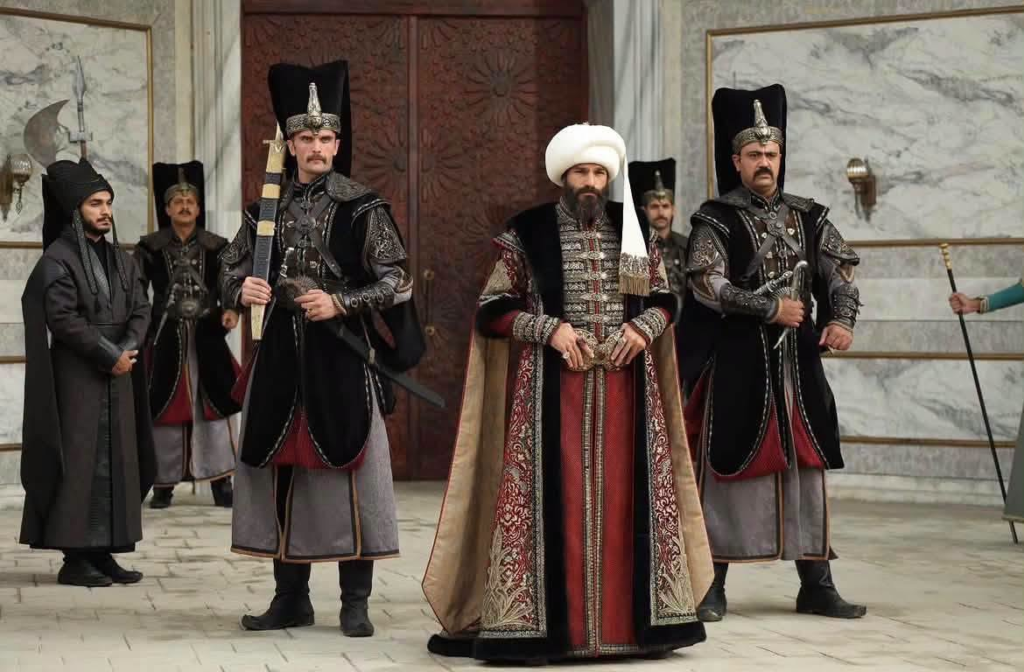
Chronology: Major Events Under Mehmed II
The following timeline highlights key developments during Mehmed II’s reign. It focuses on the broad direction of Ottoman expansion rather than suggesting that every campaign produced immediate or permanent control.
- 1451: Mehmed II returns to the throne after the death of his father, Murad II.
- 1452: He constructs Rumeli Hisarı on the European shore of the Bosporus, strengthening Ottoman control over access to Constantinople.
- 1453: Ottoman forces capture Constantinople on 29 May.
- 1454–1455: Ottoman campaigns continue in Serbia as Mehmed seeks to consolidate Ottoman influence in the Balkans.
- 1456: The Ottoman siege of Belgrade fails, demonstrating that Mehmed’s military ambitions still faced serious limits.
- 1458–1460: Ottoman forces campaign in the Peloponnese, bringing the remaining Byzantine successor state known as the Despotate of the Morea under Ottoman control.
- 1461: Trebizond, the capital of the Empire of Trebizond, is conquered, removing another Byzantine successor state.
- 1463: Ottoman expansion in Bosnia contributes to a prolonged conflict with Venice and other regional powers.
- 1463–1479: The Ottoman–Venetian War brings repeated fighting over territories, fortresses, trade interests and maritime influence.
- 1473: Mehmed defeats the Aq Qoyunlu ruler Uzun Hasan at the Battle of Otlukbeli, strengthening Ottoman influence in eastern Anatolia.
- 1475: Ottoman forces seize Genoese possessions around Caffa in Crimea, while the Crimean Khanate enters a dependent relationship with the Ottoman sultanate.
- 1478–1479: Ottoman pressure on Venetian holdings and the subsequent peace agreement reshape relations between the two powers.
- 1480: Ottoman forces capture Otranto in southern Italy, while the campaign against Rhodes fails to secure the island.
- 1481: Mehmed II dies while preparing for another campaign. His son Bayezid II succeeds him after a struggle over the succession.
These events show that Ottoman expansion was a long process of warfare, diplomacy and political consolidation. Victories expanded the empire, while failed campaigns and negotiated settlements revealed the limits of its military reach.
Expansion in the Balkans
The Balkans remained central to Mehmed II’s imperial strategy. The region contained strategically important fortresses, agricultural lands, trade routes and political centres. Control over these areas also helped protect Ottoman territories in southeastern Europe.
Serbia and the struggle for regional control
Mehmed continued his predecessors’ efforts to strengthen Ottoman influence in Serbia. The region’s political position was complicated by relations with Hungary, Venice and other European powers.
Ottoman campaigns increased pressure on Serbian rulers and helped expand Ottoman influence. Nevertheless, the failed siege of Belgrade in 1456 showed that major fortifications and determined defenders could prevent Ottoman advances.
The episode is important because it challenges the idea that Mehmed’s campaigns were an uninterrupted sequence of victories. His expansion depended on military resources, logistical preparation and the political circumstances of each campaign.
The Morea and the end of Byzantine successor rule
The Despotate of the Morea, located in the Peloponnese, represented one of the remaining political legacies of the Byzantine world. Mehmed’s campaigns culminated in the conquest of the territory in 1460.
This development further reduced the number of independent Byzantine successor states. It also strengthened Ottoman control over strategically important parts of southern Greece.
Bosnia and the wider Balkan frontier
Ottoman expansion into Bosnia and neighbouring territories increased the empire’s influence in the western Balkans. However, the process involved warfare, local political rivalries and changing relationships with neighbouring powers.
The Ottoman state did not govern every newly conquered territory in precisely the same way. Local arrangements, military requirements and existing social structures influenced how authority was established.
This flexibility helped the empire expand, although it also meant that central control varied across different regions.
Expansion in Anatolia and the Black Sea Region
Mehmed II’s imperial programme also focused on Anatolia, where several Turkish principalities and regional powers competed for influence.
The conquest of Trebizond
In 1461, Ottoman forces captured Trebizond on the Black Sea coast. The Empire of Trebizond had survived as a successor state to the Byzantine world, but its strategic position made it vulnerable to Ottoman expansion.
Its conquest strengthened Ottoman authority along the southern Black Sea coast and removed another independent imperial rival.
The Battle of Otlukbeli, 1473
The Aq Qoyunlu ruler Uzun Hasan emerged as a significant opponent to Ottoman ambitions in eastern Anatolia. The two powers competed over regional influence, political alliances and control of strategically important territories.
At the Battle of Otlukbeli in 1473, Mehmed’s forces defeated Uzun Hasan’s army. The victory strengthened the Ottoman position, although it did not eliminate all rival powers in the region.
Otlukbeli demonstrates that Mehmed’s military strategy extended beyond Europe. The Ottoman Empire’s future depended partly on its ability to secure Anatolia and manage relationships with neighbouring Muslim dynasties.
Crimea and the Black Sea trade
In 1475, Ottoman forces captured important Genoese possessions in Crimea, including Caffa. The intervention strengthened Ottoman influence over Black Sea commerce and altered the balance of power in the region.
The Crimean Khanate subsequently entered a dependent relationship with the Ottoman sultanate. This relationship provided the Ottoman government with an important political and strategic partner, although the khanate retained its own ruling dynasty and internal structures.
Control over coastal strongholds and commercial networks helped the empire project power beyond its immediate territorial borders.
The Ottoman–Venetian War and Maritime Ambitions
Venice was one of the most important maritime and commercial powers in the eastern Mediterranean. Its trading networks and fortified possessions brought it into repeated conflict with Ottoman expansion.
The Ottoman–Venetian War of 1463–1479 involved campaigns across the Aegean, the Balkans and other strategically important areas. The conflict was not simply a contest for territory. It also concerned maritime access, commercial privileges and influence over regional trade.
The war ended with a peace agreement in 1479. Venice accepted significant political and territorial disadvantages in exchange for the restoration of more stable relations.
The outcome demonstrated Mehmed’s determination to reduce competing powers’ ability to obstruct Ottoman expansion. It also revealed the costs of prolonged warfare: maintaining fleets, armies and fortifications required substantial financial and administrative resources.
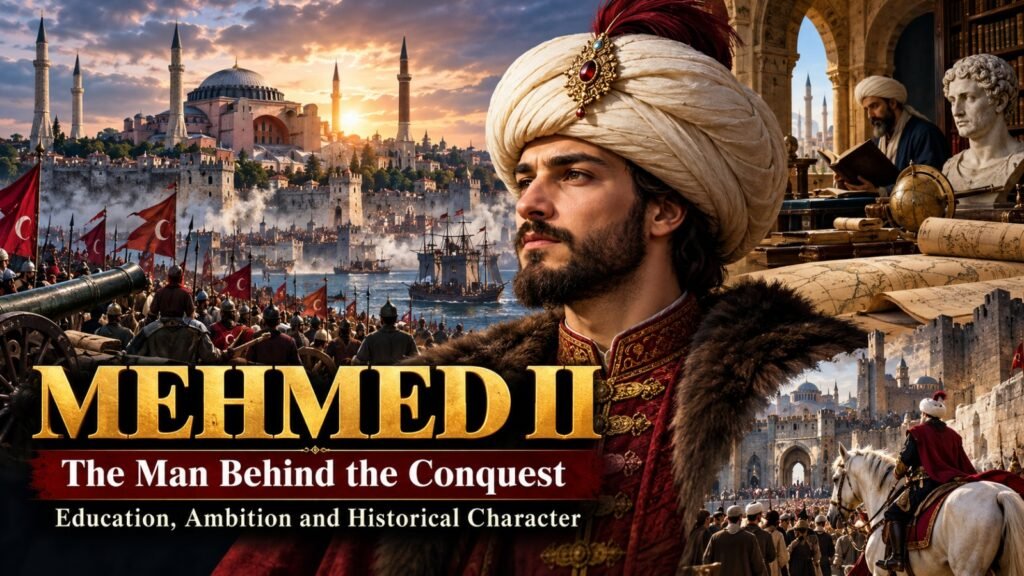
How Mehmed II Reformed Ottoman Government
Military expansion could not sustain an empire without an effective system of administration. Mehmed II therefore sought to strengthen the institutions through which the Ottoman state collected revenue, appointed officials and exercised authority.
Historians often associate his reign with an important stage in the development of Ottoman central government. These changes were gradual and contested rather than a complete transformation achieved through a single decree.
Strengthening the authority of the sultan
Mehmed worked to reduce the independence of powerful political groups and strengthen the position of the dynasty. His policies affected established officials, military elites, landholders and other groups whose influence could limit the sultan’s authority.
The prestige gained from the conquest of Constantinople helped him pursue this agenda. Yet centralisation created opposition because changes in offices, revenue and privileges affected powerful interests.
Mehmed’s approach combined the appointment of loyal servants with efforts to regulate political institutions more closely. This helped strengthen the central government, but it also made the relationship between the sultan and established elites a continuing source of tension.
The development of imperial law
Ottoman government relied on Islamic legal traditions as well as dynastic regulations known as kanun. These regulations addressed areas of public administration, taxation, land tenure and government procedure.
During Mehmed’s reign, legal and administrative regulations helped define the responsibilities of officials and the relationship between imperial authority and provincial administration.
The legal framework associated with Mehmed II was influential, but its later transmission and compilation require careful interpretation. Not every surviving regulation can automatically be treated as an unchanged document issued by the sultan himself.
The wider significance is that Ottoman rulers increasingly used written rules and administrative procedures to organise government. This development supported a more systematic exercise of imperial authority.
Taxation and land revenue
Revenue was essential to the Ottoman military and administrative system. The state needed resources to maintain soldiers, pay officials, construct fortifications and support the capital.
The timar system was an important element of Ottoman provincial administration. Under this arrangement, designated revenue rights could be assigned in return for service, particularly military obligations. A timar was not simply the same as modern private ownership of land.
Mehmed’s government also attempted to revise aspects of revenue allocation and landholding arrangements. These measures have sometimes been described collectively as land reform, but historians debate their extent, implementation and long-term effects.
The policies aimed to strengthen the state’s ability to direct revenue and reduce the independent power of some holders of economic privileges. Their success varied, and some measures encountered resistance or were modified after Mehmed’s death.
Military Organisation and the Ottoman War Machine
Mehmed II’s expansion depended on more than battlefield courage. Ottoman campaigns required planning, logistics, artillery, naval power and the coordination of different military forces.
The Janissaries
The Janissaries formed an important component of the sultan’s infantry. They were part of the Ottoman military establishment and were increasingly important to the central government.
Their role illustrates the connection between military organisation and political authority. A ruler who could maintain troops dependent on the central state had an important means of reducing reliance on regional powerholders.
However, the Janissary corps and other Ottoman military institutions changed over time. Their later size, structure and influence should not be projected unchanged onto Mehmed’s reign.
Artillery and siege warfare
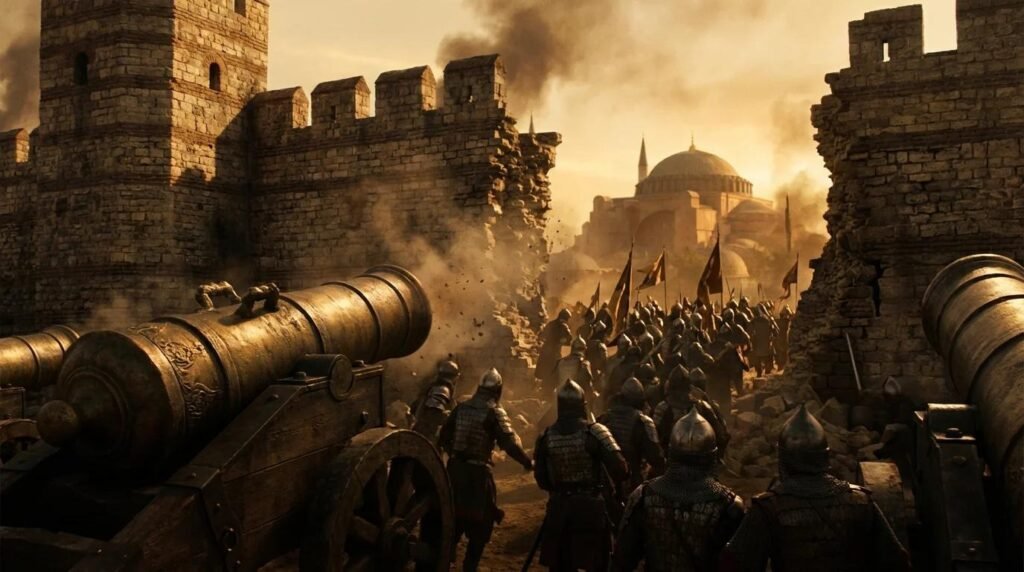
The conquest of Constantinople demonstrated the importance of heavy artillery in Ottoman siege operations. Large cannon, engineering work and coordinated assaults helped Ottoman forces overcome formidable defences.
Mehmed continued to use military technology and siege methods as part of his wider expansion. Yet artillery alone did not guarantee victory. Logistics, intelligence, terrain, leadership and the ability to sustain campaigns were equally important.
The failed siege of Belgrade in 1456 is a useful reminder that the Ottoman military remained powerful but not invincible.
Naval power
The Ottoman Empire’s position between the Black Sea and the Mediterranean made maritime strength increasingly important. Naval operations supported campaigns, protected strategic coastal positions and challenged the commercial interests of rival powers.
The conflict with Venice encouraged the development and deployment of Ottoman naval resources. The capture of Genoese possessions in Crimea also strengthened the empire’s position along important maritime routes.
Together, the army and navy allowed Mehmed to pursue an imperial strategy across several theatres of war.
Constantinople as the Centre of a New Imperial Order
After 1453, Mehmed II invested in making Constantinople a functioning capital. Conquest had brought the city under Ottoman rule, but its long-term importance depended on rebuilding and repopulation.
The government encouraged people from different parts of the empire to settle in the city. Commercial activity, religious institutions and public buildings were important to its recovery.
Mehmed’s architectural patronage included the Fatih Mosque complex, which incorporated religious, educational and charitable functions. Such projects served practical needs while also expressing the authority and prestige of the dynasty.
The city remained home to diverse religious and cultural communities. Ottoman rule established new political arrangements while preserving certain institutions that helped manage the city’s Christian population.
These arrangements were hierarchical and should not be confused with modern ideas of equal citizenship. Nevertheless, the management of a diverse capital required negotiation, administrative planning and the participation of different communities.
Constantinople’s transformation was therefore both urban and political: it became the centre of an expanding empire and a symbol of Mehmed’s ambition to establish a lasting imperial dynasty.
The Limits and Costs of Mehmed II’s Reforms
Mehmed’s reign is often presented as a turning point in Ottoman centralisation, but his programme had limits.
Powerful families, religious foundations, military elites and provincial interests possessed resources and relationships that could not easily be brought under direct royal control. Attempts to change their privileges could produce opposition.
Some revenue and landholding reforms were unevenly implemented, and later rulers adjusted elements of Mehmed’s policies. The administrative system that emerged under the Ottomans was therefore the result of continued negotiation and development rather than the achievement of one ruler alone.
Expansion also imposed costs. Campaigns across the Balkans, Anatolia and the Mediterranean required money, supplies, soldiers and sustained political attention. Military setbacks, including the failure at Belgrade and the unsuccessful siege of Rhodes, exposed the limits of Ottoman power.
Mehmed’s final years demonstrate both the scale of his ambitions and the unfinished character of his project. When he died in 1481, his successor Bayezid II inherited a powerful and expanding empire, but also the challenge of managing the political consequences of his father’s policies.
The Legacy of Mehmed II’s Expansion and Reform
Mehmed II reshaped the Ottoman Empire by connecting territorial conquest with administrative development. His campaigns expanded Ottoman influence across the Balkans, Anatolia and the Black Sea region, while his policies sought to strengthen the authority of the sultan and organise the resources of the state.
His greatest achievement was not a single battle or reform. It was the combination of military power, imperial ambition, capital-building and institutional change that helped establish Constantinople as the centre of Ottoman rule.
His successors continued this process, adapting institutions and policies to new political circumstances. The Ottoman Empire’s later achievements therefore rested partly on foundations developed during Mehmed’s reign, but they were not inevitable outcomes of his policies.
Mehmed II remains a major figure in world history because he transformed the political map of his region and helped shape the institutions of a long-lasting empire. His reign also illustrates the difficulties of building a centralised state from diverse territories and competing interests.
Frequently Asked Questions
What did Mehmed II achieve during his reign?
Mehmed II captured Constantinople in 1453, expanded Ottoman power across the Balkans and Anatolia, strengthened influence over parts of the Black Sea region, supported the development of imperial institutions and worked to centralise government.
How did Mehmed II expand the Ottoman Empire?
He used military campaigns, strategic fortifications, diplomacy and political alliances. Major developments included the conquest of Constantinople in 1453, Trebizond in 1461, the defeat of Uzun Hasan at Otlukbeli in 1473 and the capture of Genoese possessions in Crimea in 1475.
What reforms did Mehmed II introduce?
His reign was associated with the development of imperial legal regulations, changes to revenue and landholding arrangements, stronger central oversight and a more structured relationship between the sultan, military elites and government officials.
What was the purpose of Mehmed II’s centralisation policies?
The aim was to strengthen the authority of the Ottoman dynasty, improve the state’s ability to mobilise resources and reduce the independent political power of groups that could challenge the sultan.
What was the timar system?
The timar system assigned specified revenue rights in return for service, particularly military obligations. It was an important part of Ottoman provincial administration and should not be confused with straightforward private ownership of land.
Did Mehmed II’s reforms succeed completely?
No. His policies strengthened central authority in important ways, but their implementation varied and some measures faced resistance. Later sultans modified aspects of the system, showing that Ottoman state-building remained an ongoing process.
Why was Constantinople important to the Ottoman Empire?
Its location connected Europe and Asia and gave the Ottomans a major strategic, commercial and symbolic centre. Under Mehmed II, it became the principal capital of an expanding empire.
How did Mehmed II influence later Ottoman sultans?
He strengthened the imperial role of the sultan, supported administrative and legal development, expanded the empire’s territory and established Constantinople as the centre of government. Later rulers inherited and adapted these institutions.
Sources and Further Reading
- Çiğdem Kafescioğlu, Constantinopolis/Istanbul: Cultural Encounter, Imperial Vision, and the Construction of the Ottoman Capital. Penn State University Press. Read about the book.
- Abdurrahman Atçıl, “Scholars in Mehmed II’s Nascent Imperial Bureaucracy (1453–1481),” Cambridge University Press. Read the chapter summary.
- Heather L. Ferguson, The Proper Order of Things: Language, Power, and Law in Ottoman Administrative Discourses. Stanford University Press. Read the chapter on kanunname and administration.
- Oktay Özel, “Limits of the Almighty: Mehmed II’s ‘Land Reform’ Revisited.” Read the scholarly paper.
- OpenStax, World History, Volume 1: To 1500, section on the Ottomans and the Mongols. Read the textbook section.
This article is an original historical synthesis based on published scholarly and educational sources. Interpretations of Mehmed II’s reforms differ, particularly regarding landholding, taxation and the extent of centralisation during his reign.