The Complete History of the Seljuk Empire: From Nomads to Rulers of the East
The story of the Seljuks is one of the most fascinating transformations in history. Emerging from the vast steppes of Central Asia, a nomadic tribe of fierce horse archers rose to become the protectors of the Islamic world, reshaping the Middle East and laying the cultural and political groundwork that would eventually lead to the Ottoman Empire.
To understand the Complete History of the Seljuk Empire, we have to look at it step-by-step, analyzing the era of each great Sultan who contributed to the empire’s rise, golden age, and eventual fragmentation.
1. The Origins: Oghuz Turks and Seljuk Beg
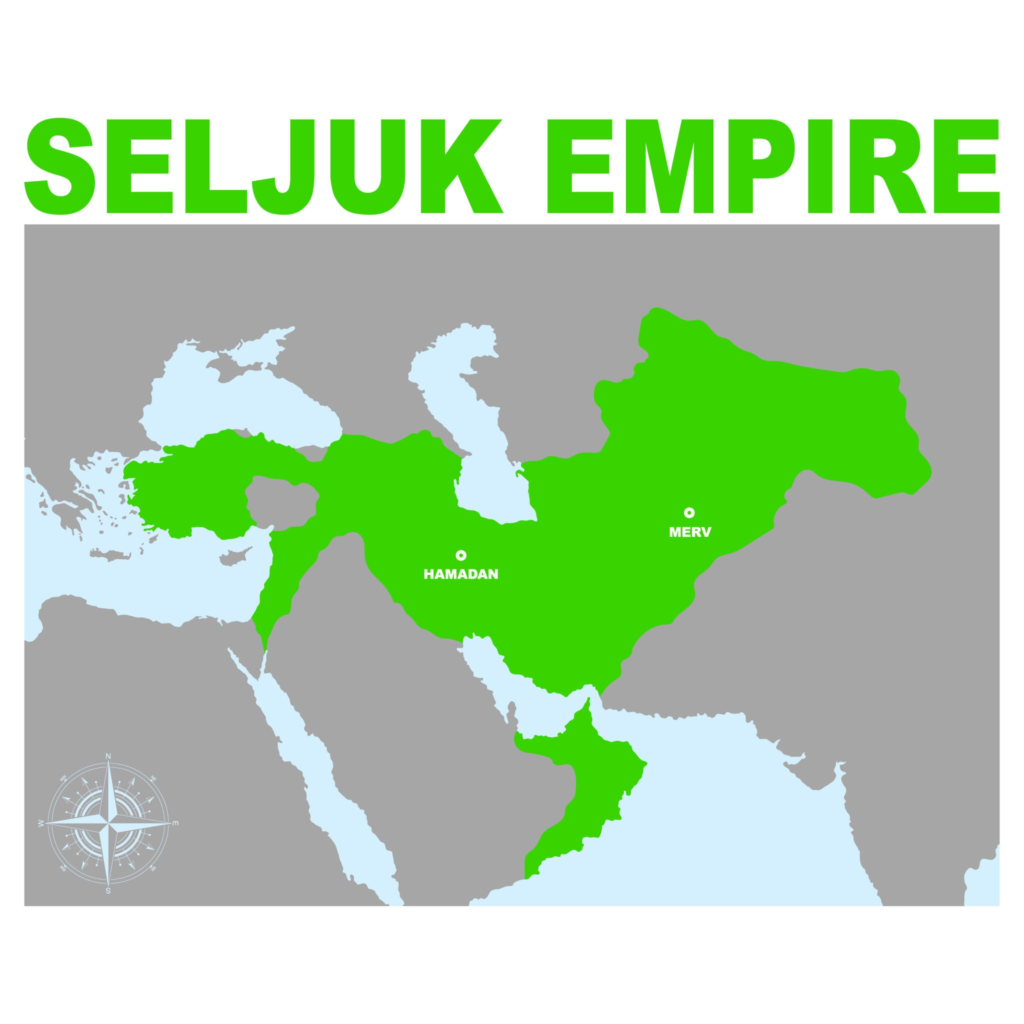
The roots of the empire begin with the Oghuz Turks, pastoralist nomads roaming the Central Asian steppes. In the late 10th century, a leader named Seljuk Beg broke away from the Oghuz Yabgu State and settled his people near the Syr Darya river. Here, the tribe embraced Sunni Islam, shifting their destiny forever. Though Seljuk Beg did not rule an empire himself, he gave his name to the dynasty that would soon conquer the known world.
2. Era of the Sultans: A Step-by-Step Timeline
The true foundation and expansion of the empire was carried out by Seljuk Beg’s grandsons and their descendants. Here is the chronological breakdown of the most pivotal rulers.
Tughril Beg: The Foundation
1037 – 1063
Tughril Beg, alongside his brother Chaghri, officially founded the empire. In 1040, at the decisive Battle of Dandanaqan, they crushed the Ghaznavid Empire, taking control of Khorasan. In 1055, Tughril marched into Baghdad, the heart of the Islamic world. The Abbasid Caliph gave him the title of “Sultan” and “King of the East and West,” officially validating Seljuk rule.
Alp Arslan: The Hero of Manzikert
1063 – 1072
Succeeding his uncle Tughril, Alp Arslan massively expanded the empire’s borders into Armenia and Georgia. His defining moment came in 1071 at the Battle of Manzikert, where he decisively defeated the Byzantine army and captured Emperor Romanos IV Diogenes. This victory effectively opened the doors of Anatolia (modern-day Turkey) to Turkish settlement, changing the demographics of the region forever.
Malik-Shah I: The Zenith
1072 – 1092
Under Malik-Shah I, and his brilliant Persian vizier Nizam al-Mulk, the Seljuk Empire reached its peak. The empire’s borders stretched from the shores of the Mediterranean in the west to the borders of China in the east. This era was marked by massive cultural and educational investments, including the creation of the Nizamiyya universities and advancements in science, art, and architecture.
Ahmad Sanjar: The Last Great Seljuk
1118 – 1153
Following Malik-Shah’s death, the empire suffered from internal civil wars among his sons. Ahmad Sanjar eventually emerged as the supreme ruler, known as al-sultān al-a’zam (the Greatest Sultan). He managed to hold the eastern territories together for decades but faced constant rebellions and rising threats from the Khwarazmians and invading Kara-Khitai forces.
3. Fragmentation and Legacy
Following the capture and eventual death of Ahmad Sanjar in 1157, the Great Seljuk Empire fractured. Local governors (Atabegs) declared independence, and various branches of the Seljuk family established their own smaller states.
The most prominent of these was the Sultanate of Rum, based in Anatolia (with its capital in Konya), which survived until the Mongol invasions of the 13th century.
The Seljuks left an indelible mark on history. They revived a fractured Islamic world, championed Sunni orthodoxy, and seamlessly blended Turkic military prowess with Persian administrative and cultural brilliance. Most importantly, their conquest of Anatolia paved the way for the eventual rise of a small frontier tribe led by a man named Osman—the founder of the Ottoman Empire.