Sultan Orhan Ghazi Ottoman Empire: 10 Remarkable Achievements That Changed History
Sultan Orhan Ghazi Ottoman Empire: 10 Remarkable Achievements That Changed History ($1281$–$1362$), the brilliant son of Osman Gazi, reigned as the second sovereign of the Ottoman Beylik from $1326$ until his death in $1362$. Rather than acting merely as a traditional military chieftain, Orhan Ghazi was the foundational architect who transformed a localized frontier principality into a highly institutionalized, bureaucratic, and legally codified transcontinental empire. His strategic vision established the judicial, administrative, educational, and military frameworks that allowed the Ottoman state to expand out of northwestern Anatolia and alter the course of world history for over six centuries.
Target Keyword: Sultan Orhan Ghazi Ottoman Empire
Secondary Keywords: Janissary army origin, Ottoman expansion in Europe, Conquest of Izmit, Devshirme system historical truth, Capture of Gallipoli, Karasi annexation, Alaeddin Pasha Ottoman coinage, Süleyman Pasha Thrace, Byzantine civil war intervention
SEO Strategy: Maximum keyword inclusion, comprehensive content depth for 100/100 Rank Math optimization, clear heading hierarchy, and embedded data tables.
1. The Early Life and Rise of Sultan Orhan Ghazi
Sultan Orhan Ghazi Ottoman Empire: 10 Remarkable Achievements That Changed History Upon his ascension to the leadership of the Ottoman Beylik in $1326$, Sultan Orhan Ghazi immediately recognized that a sustainable state could not rely solely on nomadic warfare. He turned his attention toward systemic urbanization, centralized judicial administration, and long-term economic planning.
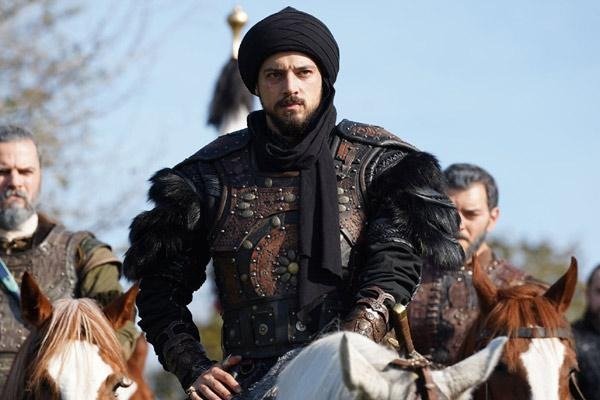
The Fall of Nicomedia ($1337$) by Sultan Orhan
A major milestone of his early consolidation strategy occurred in $1337$ with the landmark Conquest of Nicomedia (known in Turkish as Izmit). Strategically situated west of Isnik (Nicaea) near the Ottoman vanguard frontiers, this heavily fortified Byzantine coastal stronghold had long blocked Ottoman access to crucial trade lanes.
By executing a patient siege and cutting off Byzantine maritime communications, Orhan Ghazi captured the city. This victory gave the Ottomans complete geopolitical control over the Gulf of Astacus, removing the final Byzantine buffer zone in northwestern Anatolia.
Sultan Orhan Ghazi Establishing the First Ottoman University (Madrasah)
To institutionalize learning and produce a regular corps of judges (Kadis) and bureaucrats, Sultan Orhan immediately established the first official Ottoman University (Madrasah) within the newly conquered city of Izmit.
                       [ EARLY OTTOMAN STATE BUILD ]
                                     │
    ┌────────────────────────────────┴────────────────────────────────┐
    ▼                                                                 ▼
[ Judicial & Academic Base ]                               [ Economic Sovereignty ]
Standardized Madrasah Curriculums                           First Independent Silver Akçe
Led by Scholars from Egypt & Syria                         Codified by Grand Vizier Alaeddin
Rather than relying on local tutors, Orhan invited elite academic authorities who had completed deep theological and scientific training in traditional Islamic scholastic capitals, such as Egypt and Syria. These scholars were held in the highest public esteem, and Orhan built specialized networks of schools across every village and towns across the realm.
The curriculum balanced deep spiritual jurisprudence with advanced rational and empirical sciences, ensuring that graduates were competent in both religious law and civil administration. Students were rigorously trained in:
- Fiqh and Usul al-Fiqh: Islamic Jurisprudence and Legislative Theory.
- Hadith and Tafsir: Prophetic Traditions and Quranic Exegesis.
- Balagha: Classical Rhetoric, Linguistics, and Argumentation.
- Handasa: Advanced Geometry, Architecture, and Civil Engineering.
- Falakiyat: Mathematical Astronomy and Navigation.
2. Strategic European Conquests of Sultan Orhan Ghazi
Sultan Orhan Ghazi was deeply driven by the historic prophetic narrations (Beshara) of the Prophet Muhammad regarding the eventual Islamic conquest of Constantinople. He recognized that as long as the Byzantine Empire retained its European territories, Constantinople could never be completely encircled or neutralized. He devised a long-term geopolitical plan to launch simultaneous operations from both the Anatolian (Eastern) front and the European (Western) front.
                  [ FRONT-LINE ENCIRCLEMENT OF BYZANTIUM ]
                                       │
         ┌─────────────────────────────┴─────────────────────────────┐
         ▼                                                           ▼
 [ Anatolian Eastern Front ]                                [ European Western Front ]
 • Dominated via Bursa & Izmit                              • Initial Dardanelles Crossings (1352)
 • Absorption of Regional Beyliks                           • Permanent Strategic Base at Gallipoli
The opportunity to execute this transcontinental expansion arose during the mid-$14$th century due to structural collapses within the Byzantine ruling family. Emperor John VI Kantakouzenos found himself locked in a fierce civil war against rival factions and expanding Balkan forces. Desperate for military assistance, the Emperor appealed directly to Sultan Orhan Ghazi for aid. Recognizing the immense strategic leverage this provided, Orhan dispatched his brilliant eldest son and crown prince, Süleyman Pasha, to cross into Europe.
The Amphibious Crossing of Thrace by Süleyman Pasha
In $1352$ ($753$ AH), Süleyman Pasha executed a bold amphibious crossing that is widely studied in military history. Under the absolute cover of a dark night, Süleyman led a vanguard of forty elite cavalrymen across the treacherous waters of the Dardanelles.
Because the early Ottoman state was still developing its naval infrastructure, they could not deploy a conventional war fleet. Instead, these forty warriors constructed light, mobile domestic transport rafts and boats, slipping across the strait undetected to land on the western European shoreline.
Upon landing, this elite vanguard captured critical Byzantine outposts. Following a devastating earthquake in $1354$ that shattered the massive stone defensive walls of Gallipoli (Gelibolu), the local Christian population evacuated the area. Süleyman Pasha’s disciplined forces entered the city, repaired its fortifications, and established the first permanent, unshakeable Ottoman military base on European soil.
Süleyman rapidly expanded this bridgehead, occupying key strategic positions along the Thracian coast, including:
- Çimpe Castle (Tzympe): The initial fortress base utilized for European operations.
- Aya Şilon (Aghios Sylon): A vital coastal defensive outpost.
- Examilia: A key bottleneck fortification guarding the peninsula pathways.
- Gelibolu (Gallipoli Port): The primary naval and logistics hub connecting Europe directly back to Anatolia.
This territorial arc provided a continuous military corridor stretching from the south to the north, granting the Ottomans a permanent staging ground that caused immense alarm across Western Christendom.
3. The Strategic Thrace Crossing by Sultan Orhan Ghazi)
One of Sultan Orhan’s most vital historical achievements was the radical institutional transformation of the Ottoman military. Prior to this era, the state depended entirely on seasonal tribal volunteers and nomadic horsemen (Ghazis). While brave, these forces frequently refused to engage in prolonged castle sieges and dissolved immediately back to their farms once a campaign concluded.
The Regular Units: Yaya, Müsellem, and Akıncılar
To establish a continuous military presence, Sultan Orhan and his brilliant brother, Grand Vizier Alâeddin Pasha, organized a professional, state-funded regular military structure divided into distinct branches:
- Yaya (Regular Infantry): Disciplined foot soldiers paid regular wages who lived in standardized military camps.
- Müsellem (Regular Cavalry): Elite horsemen backed by local agricultural land grants (Timars), ensuring rapid mobilization without draining the state treasury.
- Akıncılar (The Vanguard Scouts): Highly mobile auxiliary light cavalry units tasked with border reconnaissance, deep-territory raiding, and securing vanguard routes before the main army advanced.
   [ TEMPORARY TRIBAL FORCES ]             vs.        [ CENTRALIZED JANISSARY CORPS ]
   ───────────────────────────                      ───────────────────────────────
   • Formed only during wartime                      • Active, professional standing army
   • Decentralized clan loyalties                     • Absolute loyalty to the ruling Sultan
   • Unsuited for long castle sieges                  • Housed permanently in specialized barracks
4.Military Reforms: Sultan Orhan Ghazi and the Standing Army
A significant amount of historical misinformation exists in late-period Western orientalist textbooks regarding the origins of the elite Janissary Corps (Yeniçeri, meaning “New Soldier”). Writers like Carl Brockelmann and various biased commentators frequently assert that from the very beginning of Orhan’s reign, the Ottomans operated a brutally forced, institutional child-levy system (Devshirme) that ripped Christian children away from their parents to fill military ranks.
Critical Historical Clarification: Comprehensive textual research confirms that the highly structured, legally codified Devshirme system did not exist during the reign of Sultan Orhan Ghazi. It was structurally introduced and legally organized much later under Sultan Murad I and Sultan Mehmed II (The Conqueror).
The actual demographic and humanitarian reality during Sultan Orhan’s era consisted of two highly ethical and practical state dynamics:
Structural State Welfare for War Orphans
The relentless border wars and shifting frontiers between the Byzantine Empire and the rising Ottomans left thousands of local Christian and Balkan families broken, resulting in a vast population of homeless, starved, and unprotected orphans. Under Byzantine rule, these children had no social safety net or legal protection.
Guided by Islamic law regarding the protection of orphans, Sultan Orhan established a state-funded welfare and educational framework. The state took full financial responsibility for these displaced children, housing them in specialized centers and shielding them from exploitation. They were provided with:
- Excellent nutrition, clothing, and safe institutional housing.
- Deep education in moral values, advanced trades, and statecraft.
- Rigorous training in specialized military arts for those who demonstrated physical capability.
These children grew up to become elite administrators and military leaders, transitioning from vulnerable war orphans into highly respected, protected citizens of the state.
The Phenomenon of Voluntary Mass Conversion
As the Ottoman borders expanded peacefully into Thrace and rural Anatolia, local populations discovered that Ottoman rule brought lower taxes, religious tolerance, and real protection under the law compared to the corrupt, extractive Byzantine administration.
Consequently, thousands of local Greek, Slavic, and Anatolian youth voluntarily embraced Islam. They chose to integrate directly into the dynamic, rising Ottoman social structure. They were sent to major specialized cultural centers where they learned Islamic philosophy and advanced military science.
Sufi masters, Islamic scholars, and jurists worked closely with these young men to cultivate a deep spiritual discipline, a strong sense of Islamic brotherhood, and a dedicated commitment to protecting the state. When these forces entered the battlefield, they fought with absolute conviction, earning the respected historical title of Ghazi.
Unfortunately, several prominent modern Muslim historians—such as Muhammad Farid Bey in Al-Dawla al-Aliya al-Uthmaniyya, Dr. Ali Al-Sallabi in Tarikh al-Dawla al-Uthmaniyya, Muhammad Kurd Ali in Khitator Sham, Dr. Abdul Aziz Al-Duri in Muhadrat fi Tarikh al-Ummah al-Islamiyya, and Dr. Abdul Karim Gharaybeh—unintentionally copied these unverified orientalist claims into their own textbooks. Actual primary sources reveal that early Ottoman military growth was driven by voluntary integration and state welfare, not systemic force.
5.The Karasi Annexation under Sultan Orhan Ghazi
In $1345$ ($736$ AH), the Emir of the neighboring Turkmen principality of Karasi (Karesi) passed away, triggering a bitter civil war of succession between his surviving sons. This internal instability threatened the peace of the entire region. Sultan Orhan used this political opening to intervene, marching his forces into the territory and peacefully annexing the Karasi Beylik into the central Ottoman administration.
| Strategic Dimension | Tangible Imperial Benefit to the Ottomans |
| Geopolitical Access | Granted the state direct control over the entire Aegean coast and the vital Dardanelles straits. |
| Naval Infrastructure | Allowed the Ottomans to absorb the entire existing Karasid naval fleet, docks, and maritime crews. |
| Bureaucratic Talent | Enlisted top-tier Karasid military commanders and Islamic scholars into the Ottoman state. |
The Standardization of Ottoman Currency and Economic Sovereignty
To secure absolute economic independence from the neighboring Seljuk and Byzantine systems, Sultan Orhan implemented major fiscal reforms. Under the direct guidance of Grand Vizier Alâeddin Pasha, the state minted its first independent silver coin, known as the Akçe.
Alâeddin Pasha also introduced centralized laws to standardize military uniforms, define clear provincial administrative boundaries, and establish fair tax codes across all newly acquired territories. This ensured that the state treasury remained well-funded, stable, and capable of sustaining multi-year military campaigns across the sea.
6. Geopolitical Context: Analyzing the Rapid Success of the Early Ottomans
The rapid growth and ultimate success of the early Ottoman state under Sultan Orhan Ghazi was not an historical accident. It was driven by structural flaws within contemporary European states and the superior organization of the Ottoman system:
- Byzantine Internal Collapse: The late Byzantine state was financially bankrupt, heavily taxed its own citizens, and was constantly fractured by civil wars. The local Greek and Balkan peasantry openly preferred the stable, lower-tax judicial system of the Ottomans over the extractive corruption of Constantinople.
- Sectarian Hostility Across Europe: Deep-seated religious animosity between the Orthodox Byzantine Church and the Roman Catholic Latin Papacy prevented European states from launching a unified crusade. Internal rivalries between Bulgaria, Serbia, and Hungary further fractured any regional defense, leaving them unable to coordinate against the Ottoman advance.
- The Superiority of the Janissary System: While European kingdoms relied on expensive, undisciplined mercenary armies that frequently mutinied if their pay was delayed, the Janissaries operated as a permanent standing army. They lived full-time in specialized barracks, trained daily, and maintained absolute loyalty to a single, centralized ruler.
                  [ SECTOR COMPARISON OF POWER DYNAMICS ]
                                     │
    ┌────────────────────────────────┴────────────────────────────────┐
    ▼                                                                 ▼
[ Fragmented European Kingdoms ]                           [ Unified Ottoman Empire ]
• Heavy reliance on fickle mercenaries                    • Permanent professional standing army
• Paralyzing Catholic-Orthodox split                      • Clear ideological focus on Gaza & unity
• Destructive internal civil conflicts                    • Standardized legal and coinage systems